AI梦女角色绘画:梦幻少女与唯美意境的个性化原创女性角色创作
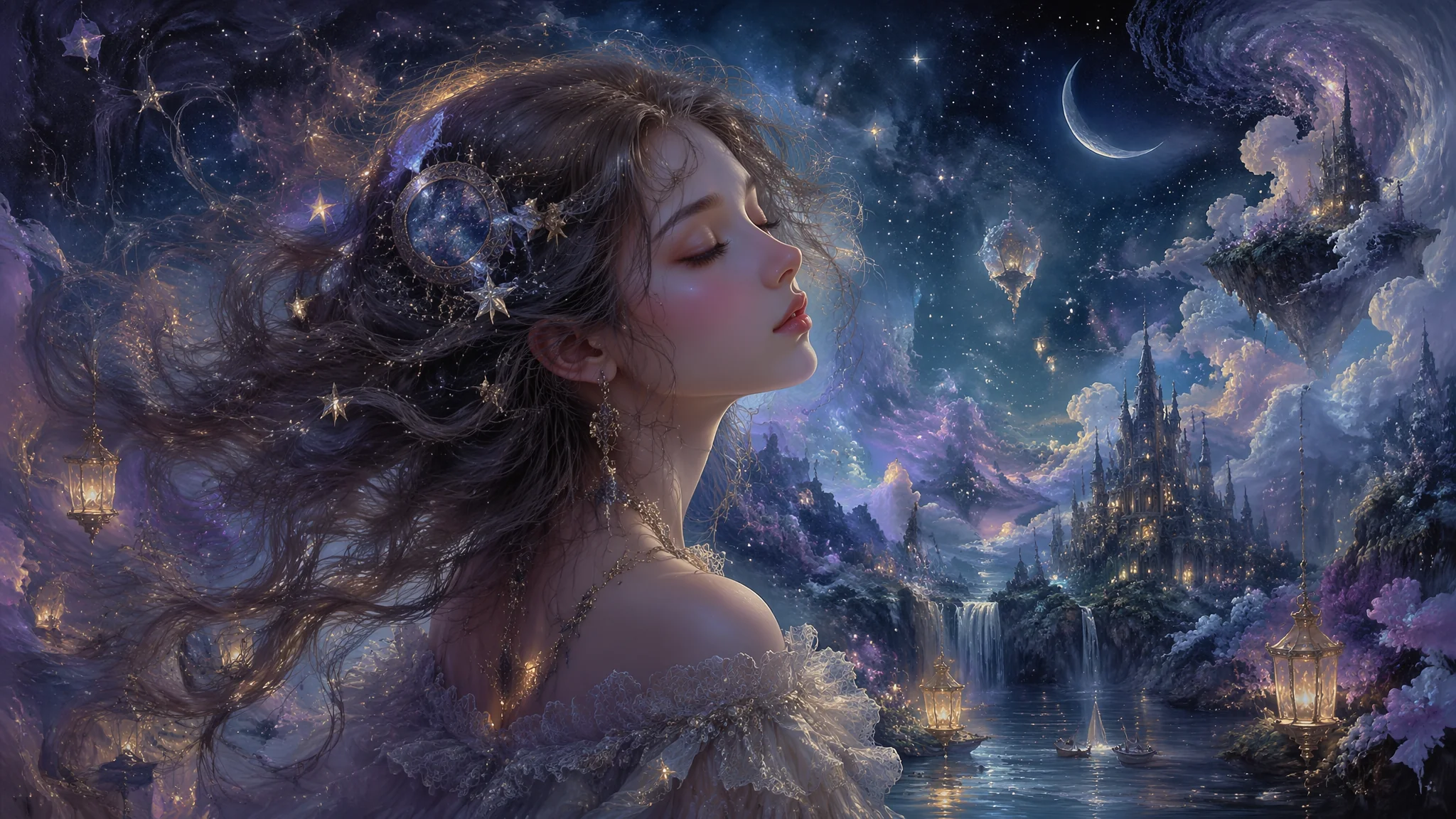
三年前我在小红书刷到一个"梦女"OC(原创角色)的帖子——作者给自己的梦女写了三千字的人物设定,从星座到MBTI到喜欢的食物,唯独没有画出来。评论区一水的"求画",作者回复:"我不会画画。"我当时就想:这不就是AI绘画最该填补的缺口吗?——让有创作欲但没有绘画技术的人能把脑海里的角色可视化。但实际操作起来发现没那么简单——你把人物设定的文字直接贴进AI,出来的通常是一个"看起来还不错但跟你想象中完全不是同一个人"的陌生少女。核心问题:文字设定和视觉表现之间有一条巨大的翻译鸿沟。这篇把"文字人设→AI视觉表现"的翻译方法梳理清楚——从气质表达到场景设计到氛围营造。
梦女人设的文字→视觉翻译——性格怎么写才能变成画面
最典型的错误:在Prompt里写"一个温柔善良的女孩"——这对AI等于什么都没说。温柔善良在画面上怎么体现?你需要翻译:温柔=面部线条圆润、眉眼间距较大、嘴角微微上翘但不是大笑、肩膀微微内收显得没有攻击性。"a gentle face with softly rounded features——the jawline is curved not angular, the eyebrows are set moderately high above the eyes creating an open and approachable expression, the mouth has a subtle relaxed curve——not a smile but the resting face of someone who smiles often, her shoulders are slightly rolled forward in a relaxed unguarded posture"。
再比如"孤僻但渴望温暖"——这是梦女人设里非常经典的类型。孤僻体现在:身体姿态封闭——双臂轻轻环抱自己、膝盖收到胸前、视线向下或看向远处不直视镜头。"sitting with her knees pulled up to her chest, arms loosely wrapped around her shins, her gaze is directed somewhere beyond the frame——she is not engaging with the viewer, she exists in her own world, her pose suggests self-containment and a gentle sadness"。渴望温暖体现在:环境中有微弱的暖色光源——一盏小灯、窗外的落日余晖——这个暖色和她整体的冷色调形成对比。"the scene is predominantly cool-toned (pale blues and grays) but there is a single warm light source——a small desk lamp or a distant sunset——that casts a thin rim of golden light along the edge of her silhouette"。这种冷暖冲突就是"渴望温暖"的视觉翻译——不需要在Prompt里写"she longs for warmth"这种AI处理不了的情感描述。
"梦幻"的三种不同质感——仙气、童话、暗梦
梦女圈子里的"梦幻"至少分三种审美方向——用同样的Prompt写"dreamy"会随机出其中一种,质量天差地别。仙气型(ethereal dreamy):核心是"轻、透、飘"——薄纱材质、半透明光感、长发随风飘动、肤色白皙近乎透明。"an ethereal aesthetic——the character's dress is made of layers of translucent chiffon that float weightlessly as if underwater, her skin has a luminous quality with light seemingly passing through the edges, her hair moves slowly as if suspended in a gentle current, the overall feeling is weightless and otherworldly"。
童话型(storybook dreamy):核心是"暖、软、甜"——温暖的蜂蜜色调、柔软蓬松的材质(针织、毛绒)、小动物或小物件陪伴、场景中充满生活化的可爱细节。"a cottagecore storybook aesthetic——warm honey-toned lighting, the character wears a chunky knit cardigan over a simple linen dress, a sleepy cat is curled in her lap, the room is filled with dried flowers hanging from the ceiling and stacks of old books with worn spines, motes of dust float in the sunbeam coming through a window"。暗梦型(dark dreamy):核心是"美、危险、脆弱"——黑色和深紫的基调中有一点冷光、精致的哥特或维多利亚元素、角色表情中有忧郁或茫然。"a dark dreamy aesthetic with a touch of melancholy beauty——the palette is dominated by deep plum and charcoal with accents of silver moonlight, the character wears a vintage black dress with delicate lace at the collar and cuffs, there are wilted dark roses at her feet, the atmosphere is beautiful but slightly unsettling"。这三种方向选定了就不能混用——仙气的光感放到暗梦里就是技术事故。参考ArtStation上概念艺术家对这三个方向的处理——每种方向都有对应的大师可以学习。
场景——梦女的"栖息地"是角色的一部分
梦女的场景不是"背景"——是角色性格的外延。一个在图书馆角落抱膝看书的梦女、一个在废弃天文台屋顶看星星的梦女、一个在午夜便利店啃饭团的梦女——这是三个完全不同的人,不是因为她们长的不一样——是因为她们的"栖息地"定义了她们。场景设计的核心思路:场景中的每一个物件都应该是角色内在世界的投射——不是装饰。
举例——"一个害怕亲密关系的梦女"的场景:"her room has transparent glass walls and she is visible from all sides——but the glass is fogged up, creating a blurred barrier between her and the outside, she sits in the center of the room on a single chair, the room contains only the bare essentials——a bed, a desk, a cup——all arranged with obsessive neatness, the emptiness of the space speaks to her inability to let things or people in"。玻璃房被雾气模糊=渴望被看见但害怕被看清。空荡荡的房间=情感上的不安全感使她无法"囤积"关系。关于角色与场景的互动关系,AI雷姆绘画教程讲了二次元角色如何在场景中建立辨识度——思路是相通的。
原创角色的"视觉符号系统"——让梦女一眼就能被认出来
一个成功的梦女OC(无论是自己的还是帮别人画的)需要一个独特的"视觉符号系统"——一个或几个反复出现的视觉元素,作用等同于品牌的logo。这个符号必须满足三个条件:一,简单到AI可以稳定复现(越复杂的符号AI越容易变形)。二,与角色背景故事有逻辑关联(不是随便挑个好看的东西)。三,可以在不同构图和场景中灵活出现(不是每次都必须在固定位置)。
举例——一个因为某种原因永远停留在14岁的梦女:视觉符号=蝴蝶发夹。不是同一个发夹每次出现——是不同形态的蝴蝶元素反复出现:今天是一个蝴蝶发夹别在左侧头发上,明天是衣服上有蝴蝶刺绣,后天是她在看着手心里一只真正的蝴蝶。"a recurring visual motif of a blue morpho butterfly——sometimes as a hair clip, sometimes as a pattern on the hem of her dress, sometimes as a living butterfly resting on her fingertip, the butterfly symbolizes her frozen age and her longing for transformation"。关于角色视觉符号的设计逻辑,AI柒文风格绘画探讨了个人IP的视觉符号系统——从个人原创到角色设计,底层的符号逻辑是一样的。同时也推荐看Character Design References——角色设计的视觉语言系统有大量成熟方法可以参考。
常见问题
为什么AI画的梦女眼睛总是"大得吓人"——和"梦幻"有关系吗?
有关系——但不是你想的那种关系。AI的训练数据中"梦幻少女"高度关联于"日系动漫大眼睛"——所以当你写"dreamy girl"时AI自动放大眼睛到二次元比例。如果你要的是写实或半写实风格的梦女——需要明确约束眼睛大小:"normal proportionate eyes——the iris is approximately 11-12mm in diameter which is average adult human proportion, the eyes are expressive but not exaggerated, the face maintains realistic proportions"。如果连具体mm数都写了,AI还是会倾向增大——那就加一句:"specifically avoid the anime large-eye proportion——the character should look like a real person not a cartoon"。
梦女的"氛围感"和"画面糊"怎么区分——为什么有时候朦胧变成了一团浆糊?
氛围感的"朦胧"是有控制的模糊——只在特定区域(背景、边缘、浮动粒子)出现,焦点区域(角色的眼睛、手)保持清晰。"the background and peripheral elements are slightly soft-focused creating a dreamy atmosphere——but the character's face especially the eyes and hands remain in sharp focus, the contrast between sharp and soft within the same image creates the dreamlike quality without making the entire image look out of focus"。如果整张图没有一处清晰的焦点——那就是糊了,不是氛围感。
怎么让梦女的服装不落俗套——不是所有梦幻少女都穿白色纱裙?
AI默认的梦幻少女服装=白色或浅粉色纱裙+蝴蝶结+蕾丝。打破这个模板:从角色的生活场景反推服装。"she is a dreamy girl who works the night shift at a convenience store——she wears a slightly rumpled store uniform polo shirt with the top button undone, her hair is messily tied up with a pencil, she has a tired but kind expression"。或者:"she is a dreamy girl who spends her days at the aquarium——she wears a oversized fisherman knit sweater with sea-themed enamel pins on the collar, her boots are scuffed from walking on wet concrete floors"。让服装讲角色的故事——而不是让服装讲"我是梦幻少女"这个标签。