AI全身动漫角色绘画:完整人体立绘的比例动态与服装创作教程
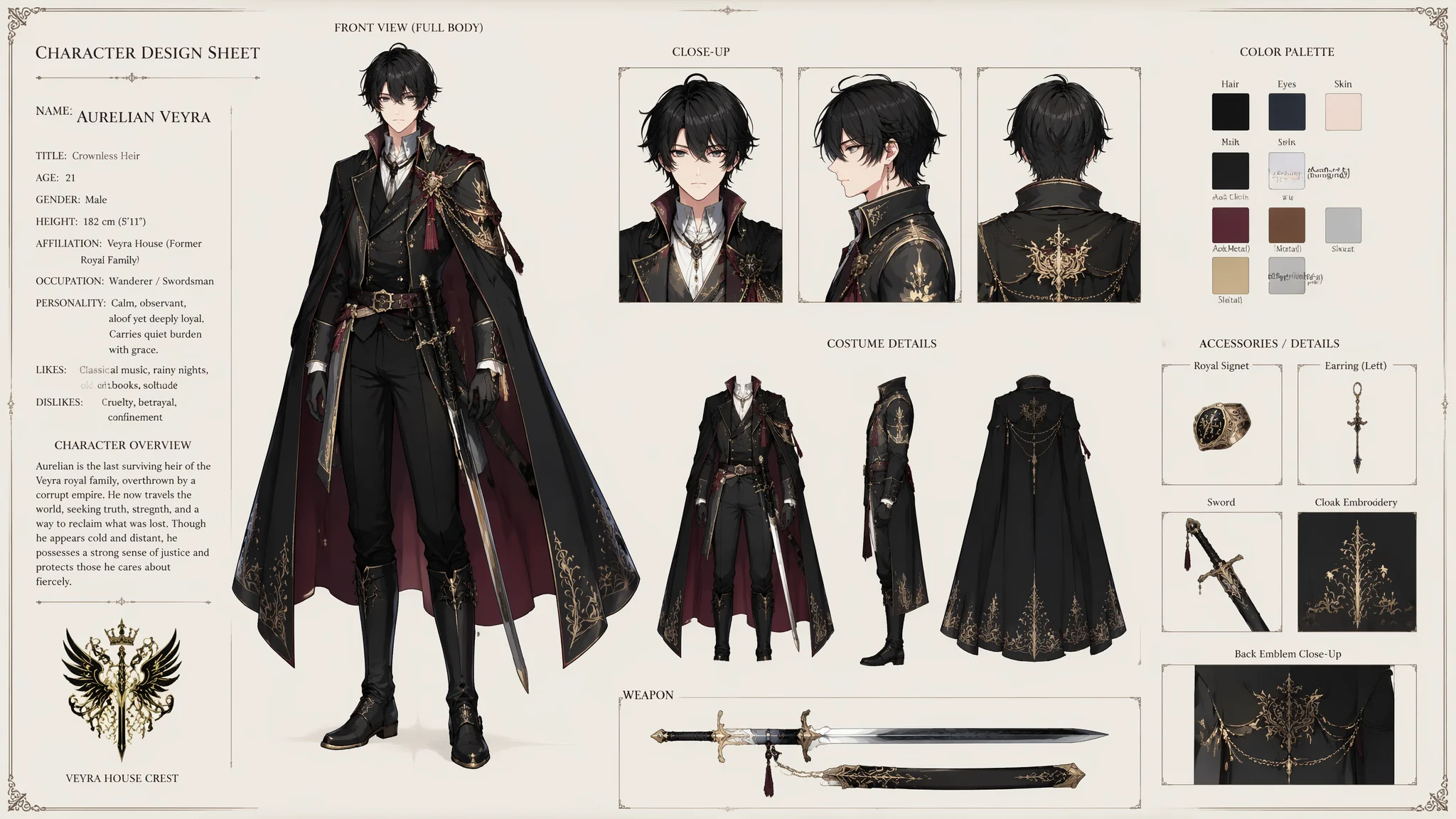
我画的第一百张全身动漫角色立绘——一个穿水手服的女高中生站在樱花树下,从脸到上半身都完美——然后往下看:右手六根手指,左腿比右腿短了三分之一,左脚像被碾过的土豆。我盯着屏幕看了很久,然后在笔记本上写下一句话:"AI画全身角色,脸是满分,脖子以下是及格线,手和脚是不及格重灾区。"从那以后我调整了策略——不再指望AI一次性画出完美全身,而是把全身立绘拆成"比例→动态→服装→手脚"四个独立关卡,每一关用不同的Prompt技巧攻克。这篇就是这套"分关攻克法"的完整教程。
比例控制——竖构图+人体参照系的Prompt密码
全身立绘最容易崩的第一关:比例。AI画半身像时头身比偏差不大(因为只画到胸或腰),但画全身时——从头顶到脚底的空间一拉长,AI的注意力就开始漂移。上半身认真画,下半身随便画。解决方案分两步:第一步——强制竖构图。"vertical portrait orientation, the canvas is tall and narrow——the character fills 80% of the vertical frame from the top of the head to the bottom of the feet, the composition is designed for a full body character sheet"。竖构图给AI一个明确的空间限制——"从上到下画满这个人"。
第二步——给AI人体参照系。"the character's body follows standard anime proportions: the total height equals 7 head lengths, the crotch is at the exact midpoint of the total height, the elbows align with the waist, the fingertips reach mid-thigh when arms are relaxed, the knees are at approximately one-quarter of the leg length from the bottom"。用具体的人体测量学标记(头长、胯部位置、手臂长度与身体的关系)——这些参照系帮助AI"校准"比例。不要只说"correct proportions"——AI不理解什么叫correct——给它具体的参照点。这个技巧和AI角色设计绘画里的比例控制方法可以互相验证。关于人体结构,Proko有免费的人体比例教学资源,Posemaniacs的3D肌肉模型可以让你精确理解比例关系。
三种动态模式——静态立绘、战斗动态、生活姿态
模式一:静态展示立绘。用于角色设计稿展示——角色正面或3/4面站立、双手自然垂或微抬、像服装店的人体模特。"a full body character design sheet, the character stands in a neutral展示 pose facing forward, arms slightly away from the body so the full outfit silhouette is visible, weight evenly distributed on both feet, the expression is neutral and calm, clean simple gradient background, the purpose is to display the character design clearly like a game character reference sheet"。展示立绘的核心——功能性(展示设计)>艺术性(氛围)。
模式二:战斗动态。用于表现角色的战斗风格和武器特性。"a full body action pose, the character is caught mid-combat——the body is in a dynamic diagonal lunge, one arm extended forward casting a spell with magical energy swirling around the hand, the other arm pulled back for balance, the cape and hair are swept dramatically to one side by the motion, the expression is intense and focused, low angle shot from slightly below making the character appear powerful and larger than life"。战斗动态的核心——对角线和不对称。AI天生喜欢画对称——所以你需要用"diagonal""asymmetrical""twisted torso"来打破对称。
模式三:生活姿态。用于表现角色的日常性格。"a full body casual pose, the character is caught in a everyday moment——leaning against a wall with one foot propped up, scrolling through a phone with a slight smile as if reading something funny, the body language is relaxed and approachable, the pose reveals personality——slightly slouched shoulders suggest a laid-back nature, the free hand is tucked into the hoodie pocket"。生活姿态的核心——角色在"做自己"。不是摆姿势给你看,而是你不小心看到了她真实的样子。关于这三种模式的更多变化和Prompt调整,AI动漫人物绘画进阶里有更深入的姿态设计框架。
服装创作——从剪影到细节的三步穿衣法
AI给角色"穿衣"时最大的问题不是画不好衣服——是衣服和身体的关系不对。衣服应该悬挂在身体上、被身体撑起、在关节处形成褶皱——但AI常常把衣服画成"身体的第二层皮肤"。三步穿衣法:第一步——定义剪影。"the outfit creates a distinctive silhouette——an A-line skirt that flares out from the waist creating a triangular lower body shape, the puffy shoulders of the jacket add width to the upper body, the overall silhouette reads clearly even in pure black"。先确认衣服的外轮廓——远看能不能分辨"这个人穿了什么形状的衣服"。
第二步——定义层叠关系。"the outfit consists of three layers: inner layer——a white collared shirt visible at the neckline and cuffs, middle layer——a V-neck knitted vest in navy blue, outer layer——a long beige trench coat worn open, the coat moves independently from the body creating dynamic negative spaces"。每一层写清楚它覆盖了什么、露出了什么、如何独立运动。第三步——定义材质和运动。"the pleated skirt is made of lightweight polyester——the pleats open and close rhythmically as she takes a step, the trench coat is heavy cotton gabardine——it swings with a weighted momentum, the knitted vest is soft wool——it clings slightly to the body contours"。材质决定运动方式——轻的布料飘、重的布料荡、弹性的布料贴。关于服装材质渲染的更多技巧可参考AI动漫人物绘画进阶中的服装设计章节。
常见问题
怎么让AI理解"从脚底往上看的低角度"和"从头顶往下看的高角度"?
用摄影术语描述透视关系:"worm's eye view——the camera is positioned at ground level looking up, the character's feet appear large and close to the lens while the head is smaller and further away, the body has a heroic towering perspective"。反之:"bird's eye view——the camera is positioned above looking down at the character, the head appears larger and the feet are foreshortened, the perspective compresses the vertical body into a dynamic top-down shot"。加上"foreshortening"(透视缩短)这个词——AI对人体透视的理解会被激活。
AI画的全身角色左右不对称(一只眼睛大一只眼睛小、一条手臂粗一条细)是常态吗?
是的——这是目前主流AI模型的结构性弱点。AI生成图像时从左到右逐步生成——它画右边时"不太记得"左边画了什么。缓解:加"perfectly bilaterally symmetrical body, both sides of the face and body are mirror images in proportions"——如果仍然不对称,接受并用在"非正面角度"——3/4侧面天然容纳不对称。正面图的不对称只能靠后期或多次生成碰运气。
画全身动漫角色时背景要不要有?有的话怎么避免"角色融入背景消失了"?
全身立绘的第一原则:角色的轮廓必须和背景清晰分离。最简单的方法——角色边缘有一圈微弱的"轮廓光"(rim light)把角色从背景里"切"出来。"a subtle rim light along the character's silhouette separating them cleanly from the background, the background is kept intentionally darker and lower contrast than the character so the eye goes to the character first"。立绘不是场景插画——背景的功能是"衬托角色",不要让它抢戏。更多角色与背景的关系处理见AI角色设计绘画。
画废了大概三十版全身立绘之后,我总结了一条经验——AI画全身角色不是"一次性画完整个人",而是"画了一张脸,然后把身体补齐"。你的Prompt越能让AI"从整体出发思考比例关系"而不是"从脸出发往下凑身体"——全身图的质量就越高。所以我现在写全身Prompt的第一句永远是构图和比例——"a full body portrait in a 3:4 vertical frame, the character is shown from head to toe with equal attention to every part of the body, the composition is designed around the entire figure not just the face"——把AI的注意力从"脸上"掰到"整个人"上。